Best 2S Tiny Whoop Setups for Filming Indoor Dog Agility Courses
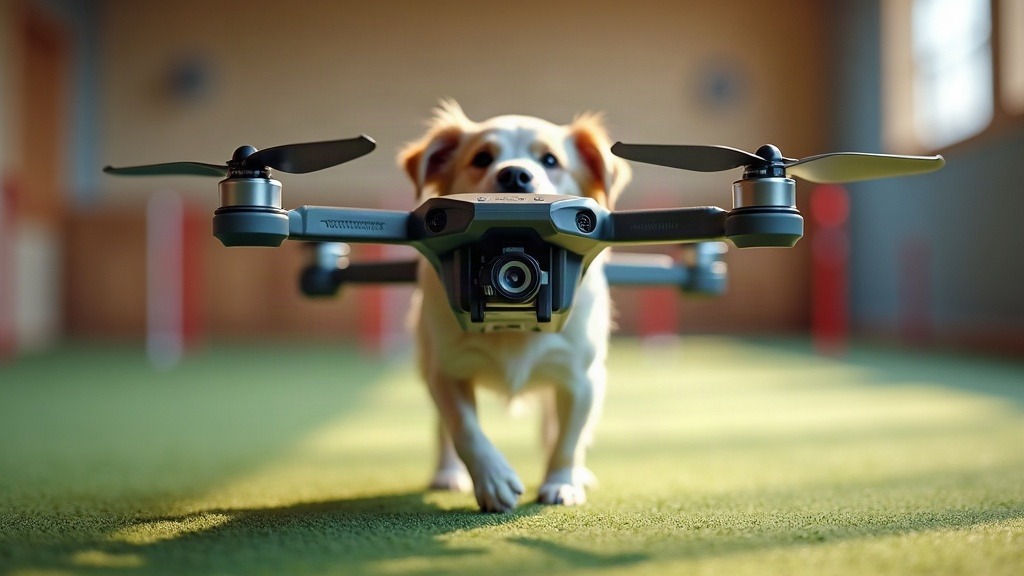
If you’re filming indoor dog agility courses with FPV, prop wash is your biggest enemy. It startles dogs, knocks over lightweight bar jumps, and ruins otherwise perfect footage. The fix is a ducted 2S tiny whoop built specifically for low-disturbance, close-proximity flying: soft propellers, ducted frames, low KV motors, and gentle throttle curves that keep air movement minimal while still delivering smooth, cinematic footage.
Why 2S Is the Sweet Spot for Agility Course Filming
Bigger batteries mean more power, and more power almost always means more prop wash. That’s exactly what you don’t want hovering a few feet above a nervous Border Collie mid-weave-pole run. A 2S setup gives you:
- Lower total thrust, which naturally reduces the air blast under and around the drone
- Lighter overall weight, so the craft can hover softly instead of “punching” through air
- Quieter motor noise, which matters a lot. Dogs react to sound just as much as air movement
- Shorter, calmer throttle response, ideal for slow tracking shots alongside a handler and dog
3S and 4S whoops are faster and punchier, sure, but that extra headroom usually gets burned on aggressive freestyle flying, not the slow, floaty, predictable movement agility filming actually demands.
Frame and Duct Choices That Matter
Prop wash reduction starts with the frame, not just the flight controller settings.
- Fully ducted frames (think Happymodel Mobula7-style enclosed ducts or Meteor65 Pro-style shrouds) redirect airflow upward and outward instead of straight down onto the course
- Deeper ducts cut turbulence better than shallow “half-guard” designs. Look for duct depth close to or exceeding prop diameter
- 1.5–2 inch prop sizes are the sweet spot; anything smaller than 1.5” often lacks stability, anything larger starts pushing more air than you need
Skip open-frame micro quads entirely for this use case. Even small props without ducting kick up a surprisingly strong downward blast at close range, more than you’d expect from something that fits in your palm.
Recommended 2S Tiny Whoop Build
A proven combo for low-disturbance indoor filming:
- Frame: 75mm–85mm fully ducted whoop frame
- Motors: 1103–1105 low-KV (6000–7000KV range). Smoother spool-up, less abrupt thrust
- Props: Soft, flexible 40mm tri-blade props. Quieter and gentler than rigid bi-blades
- Flight Controller/ESC: AIO board with a 2S-rated BLHeli_S or BLHeli32 ESC
- Battery: 300–450mAh 2S LiPo. Enough flight time (5-6 minutes) without piling on extra weight
- Camera: Lightweight digital HD FPV system (Walksnail Avatar Nano or HDZero Nano, for example) for crisp footage without added bulk
- VTX Power: Keep it low, 25mW is plenty since you’re flying indoors at close range. No need to lug around a higher-power VTX module
This build lands total AUW (all-up weight) around 35-45 grams, light enough to hover gently even at low throttle percentages.
Flight Technique Tips for Filming Around Dogs
Hardware only solves half the problem. How you fly matters just as much.
- Approach from the side or above at an angle, never straight down over a dog’s head
- Maintain at least 3-4 feet of vertical clearance during tracking shots
- Use slow, smooth throttle inputs. Sudden stick movements create thrust spikes that increase air disturbance
- Fly a wide loop instead of hovering stationary near jumps, since hovering concentrates prop wash in one spot
- Let the dog and handler get used to the drone’s sound with a few minutes of distant flying before you move in for close shots
Handling Nervous or Reactive Dogs
Even a whisper-quiet whoop can spook a sound-sensitive dog. A few things that help:
- Start with the drone off to the side of the course, not overhead
- Fly at a consistent altitude. Erratic height changes are more alarming than steady motion
- If a dog shows stress signals (ears back, tail tucked, hesitation), back off immediately and add distance
- Run a “settle” session first: let the dog explore the course with the drone parked and powered on nearby, motors humming but grounded
Final Thoughts
For filming indoor dog agility courses, a lightweight 2S ducted tiny whoop with soft tri-blade props and a low-KV motor setup gives you the gentlest possible airflow while still capturing smooth, professional-looking footage. Pair the right hardware with calm, predictable flying, and you’ll walk away with cinematic shots without ever rattling a dog mid-run or sending a jump bar clattering to the floor.