Best Micro Drones for Indoor Orbit Shots in Small Apartments
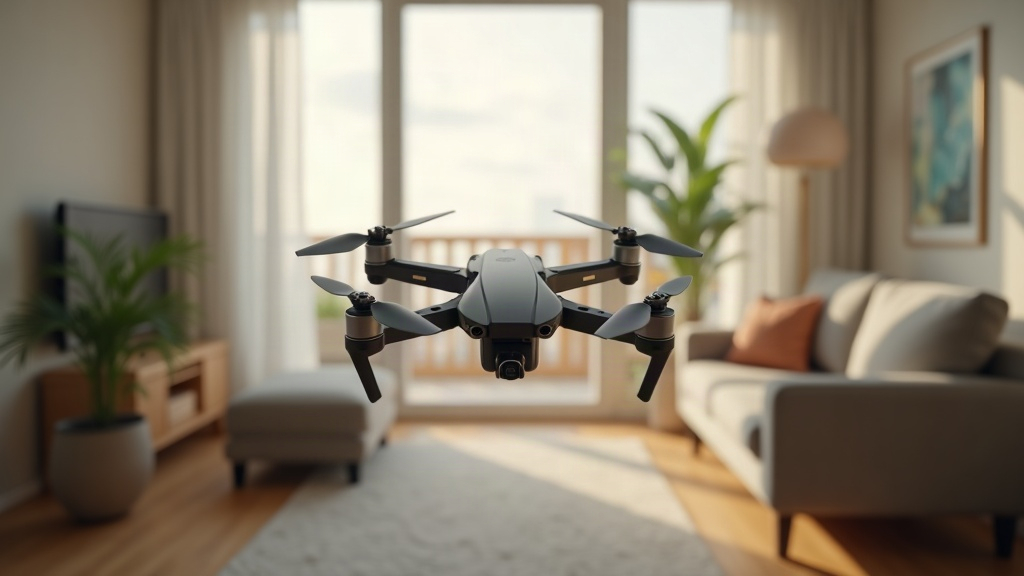
The best micro drones for practicing indoor orbit shots in small apartments are lightweight, ducted-propeller models built for stable, low-speed precision flying. A 65mm or 75mm tiny whoop is usually your safest bet here, since it can loop slowly around a person, a chair, a houseplant, or a coffee table without the kind of damage a bigger camera drone would cause the moment it clips a wall.
What Makes a Drone Good for Indoor Orbit Shots?
An orbit shot is basically flying a circle around your subject while keeping them centered in frame the whole time. Sounds easy on paper. In practice it means juggling yaw, roll, throttle, and sometimes camera tilt, all at once, all smoothly.
Inside a small apartment, the drone has to forgive your mistakes. Here’s what to look for:
- Ducted propellers: Guards around the props save your walls, furniture, fingers, and, well, the props themselves.
- Low weight: Anything under 30 grams carries less momentum, and it’s a lot less nerve-wracking flying it a foot from your face.
- Adjustable flight rates: Dialing sensitivity down makes your circles come out smoother instead of jerky.
- Stable video transmission: A clean FPV feed helps you actually see where your subject sits in the frame.
- Replaceable batteries and props: You will crash. Cheap, swappable parts keep practice sessions going.
A large GPS camera drone just isn’t built for this. It wants more room to breathe, kicks up stronger prop wash, and doesn’t stop on a dime near your bookshelf the way a whoop does.
Best Micro Drones for Indoor Orbit Practice
BetaFPV Meteor65 Air
For a genuinely tiny room, the Meteor65 Air is a solid place to start. At 65mm with prop guards and barely any weight to speak of, it’s happy circling a dining chair, a floor lamp, or a seated friend.
It really shines if your apartment has narrow hallways or a cramped living room. The short wheelbase means you can pull tight circles without needing to carry much speed to stay stable.
Best for:
- Beginners learning manual FPV control
- Very tight apartments
- Slow orbits around small objects
- Practicing with minimal crash energy
The catch: shorter flight time, and it gets pushed around more by air currents. Keep the windows shut and steer clear of AC vents.
BetaFPV Meteor75 Pro
Step up to the Meteor75 Pro and you get a bit more power, longer flight time, and a beefier camera than the 65mm whoop offers. Still indoor-friendly, but it does better in an open living room or a combined kitchen-lounge layout where you’re not dodging a coffee table every three seconds.
The extra size actually makes wide, smooth circles easier to pull off. If your 65mm feels twitchy, or it’s struggling to lug around an action camera, this is the natural next step.
Best for:
- Wider orbits around a person
- Slightly larger rooms
- Smooth cinematic practice
- Pilots who already have basic throttle control down
Drop the power setting indoors. That extra punch is great outside, but inside your apartment, it can turn a tiny correction into a wall collision in about half a second.
DJI Neo
If full manual FPV sounds intimidating, the DJI Neo takes a different route: stabilized flight, simpler controls, built more for casual content than raw stick skills.
For orbit practice, it’s handy when you want to learn camera framing and subject tracking before diving into manual flight. That said, it still needs open space and shouldn’t be treated like a bump-proof tiny whoop. It isn’t one.
Best for:
- Beginners focused on stabilized social video
- Learning automated or semi-automated movement
- Open apartment rooms with minimal clutter
- Filming subjects from a safer distance
If you want genuinely tight orbits, though, stick with a ducted 65mm FPV drone. It’s just the safer tool for close work.
Happymodel Mobula6
The Mobula6 has become something of a go-to ultra-light platform for indoor FPV, and for good reason. It’s nimble, easy to repair, and once you’ve dialed in gentler rates, capable of surprisingly precise movement.
This one suits pilots ready to move past beginner stabilization modes. Start in angle mode, get comfortable, then work your way into acro. It rewards the practice.
Best for:
- Learning controlled FPV orbits
- Customizing rates and camera settings
- Repeated indoor training sessions
- Pilots already familiar with FPV gear
A Simple Indoor Orbit Setup
Pick a subject that won’t move on you. A chair, a stool, a potted plant, even a tripod, all work fine. Set it in the most open part of the room and clear a full circle of space around it.
Before you power on, sweep the area for the obvious traps:
- Fragile decorations and glassware
- Loose charging cables
- Curtains hanging near your flight path
- Pets and bystanders who aren’t part of the exercise
- Anything light enough to get knocked over by prop wash
Set the drone to a low indoor power mode. If your controller lets you adjust rates, turn down roll and yaw sensitivity until your corrections feel gradual, not sudden.
How to Fly a Smooth Orbit Shot
A clean orbit isn’t just “circling something.” It’s two movements happening together: roll to carry you sideways around the subject, yaw to keep the lens pointed at them the whole time.
Run through this sequence:
- Hover a few feet from the subject.
- Add a touch of roll to start drifting sideways.
- Bring in gentle yaw toward the subject.
- Adjust throttle just enough to hold your altitude.
- Keep the radius steady rather than chasing speed.
Say you’re circling a chair clockwise. Roll right gently while yawing right at a slow, matching pace. If the chair starts sliding toward the edge of your frame, back off the roll or nudge the yaw up a little.
Common Problems and Fixes
The drone flies into the subject
Your radius is too tight, or your roll input is too aggressive. Back off, start farther out, and slow everything down.
The subject moves out of frame
You’re not yawing enough to keep pace. Slow down first, then add a small yaw correction instead of yanking the stick.
The drone rises or drops during turns
That’s a throttle problem, almost always. Practice flat, level circles at low speed before trying to add altitude changes into the mix.
Video looks shaky
Slow your movements down, check your props for nicks or bends, and stay away from fans and open windows. Tiny drones get pushed around by indoor air currents way more than you’d expect.
Conclusion
For most small apartments, a 65mm ducted tiny whoop like the BetaFPV Meteor65 Air or the Happymodel Mobula6 is the smart pick for indoor orbit practice. Go slow, clear your space properly, and nail consistent circles before you even think about chasing fast cinematic moves.