Beginner Guide: Planning Legal Drone Flights Near Bird Colonies
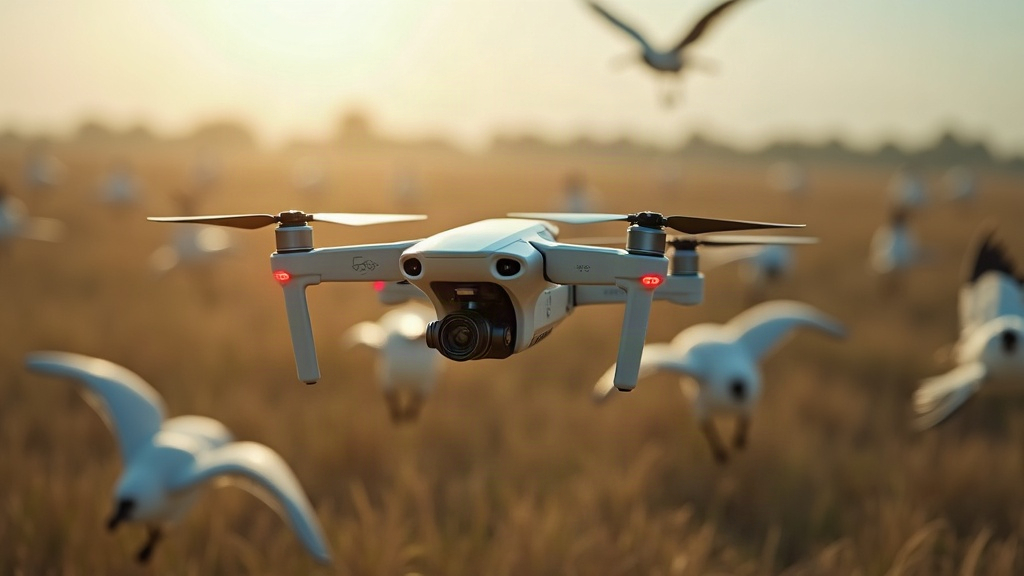
Planning a drone flight near a migrating bird nesting colony isn’t just about getting a great shot. It’s about knowing the legal boundaries, buffer zones, and seasonal restrictions that protect sensitive species from disturbance. This guide walks beginners through the practical steps to fly legally, avoid steep fines, and prevent accidental harm to nesting birds.
Why Bird Nesting Colonies Are Legally Protected
Nesting colonies, especially during migration season, rank among the most vulnerable wildlife sites on the planet. A hovering drone can mimic the silhouette of an aerial predator, and that’s often enough to trigger panic flights (biologists call this “flushing”) that leave eggs and chicks exposed to cold, direct sun, or opportunistic predators like gulls and crows circling the moment the parents scatter.
Because of this, many countries protect nesting colonies under:
- Migratory Bird Treaty Act (MBTA) – United States
- Wildlife and Countryside Act 1981 – United Kingdom
- EU Birds Directive – European Union member states
- National park and wildlife refuge regulations – site-specific, often stricter than national law
Violating these protections can carry fines ranging from $500 to over $25,000, depending on jurisdiction and whether the disturbance caused documented harm. That’s not a typo. A single careless flight over an active colony has landed operators in genuinely expensive trouble.
Step 1: Identify Protected Sites Before You Fly
Never assume a beach, cliff, or wetland is open airspace just because it looks empty. Empty to your eye doesn’t mean empty to a tern colony tucked into the dune grass.
- Check eBird or Audubon’s Important Bird Areas (IBA) maps to see documented colony locations.
- Search your country’s wildlife refuge or marine protected area database (the US Fish & Wildlife Service refuge list is a good starting point).
- Call the local ranger station or conservation authority. Many will tell you exact seasonal closures over the phone in under five minutes, no paperwork required.
Step 2: Understand Seasonal Timing
Nesting colonies aren’t protected year-round in the same way, and timing matters enormously:
- Pre-nesting (scouting/arrival): Birds are highly sensitive to new disturbances as they select nest sites.
- Incubation period: Adults may abandon eggs if repeatedly flushed, sometimes permanently.
- Chick-rearing: Flightless chicks can be trampled during panicked colony stampedes, which happens faster than you’d think.
- Post-fledging: Disturbance risk drops significantly once young birds can fly on their own.
A classic beginner mistake is checking only “is this species protected” and ignoring the calendar entirely. The same cliff that’s perfectly fine to fly over in September may be a hard no-fly zone in May, same coordinates, completely different rules.
Step 3: Follow Minimum Distance Guidelines
Exact numbers vary by country and species, but widely cited conservation guidelines recommend:
- Minimum 100 meters (330 ft) horizontal distance from any active colony
- Minimum altitude of 120 meters (400 ft) when flying nearby, not directly overhead
- Immediate withdrawal if you notice birds becoming alert, calling loudly, or lifting off in numbers
Some US wildlife refuges ban drones outright, full stop, regardless of distance. Don’t lean on general distance rules as a shortcut. Check the refuge-specific policy first.
Step 4: Get the Right Permits
Depending on where you fly:
- National parks typically ban recreational drones entirely (a blanket rule across the entire US National Park System).
- Wildlife refuges may require a Special Use Permit for any drone operation, even purely for research purposes.
- Private land near colonies still requires landowner permission plus compliance with wildlife law. A handshake agreement with a landowner doesn’t override federal or state protections, ever.
If you’re flying for research, journalism, or commercial content, apply for permits weeks in advance, not days. Many agencies process wildlife-related drone requests slowly, usually because there’s one overworked staffer reviewing environmental impact reports for the entire region.
Step 5: Use Passive Observation Techniques
Even with permits in hand, best practice still favors minimizing disturbance wherever possible:
- Launch and land well away from the colony, never adjacent to it.
- Approach gradually at altitude rather than diving in for a close shot.
- Use zoom lenses instead of proximity to capture detail, your 4K sensor can do the work your proximity shouldn’t.
- Fly during calmer weather. Birds already running on a stress budget from wind or heat have less tolerance for an added disturbance.
Common Beginner Mistakes to Avoid
- Assuming “no visible signage” means no restrictions. Plenty of protected colonies have zero posted signs.
- Flying at dawn or dusk during peak colony activity, which happens to be peak sensitivity too.
- Ignoring drone noise. Even a “quiet” drone can sound jarring in a silent coastal marsh or wetland.
- Skipping documentation of your flight plan, which makes it much harder to prove compliance if a ranger stops you and asks questions.
Conclusion
Flying a drone near migrating bird nesting colonies is entirely doable, legally and responsibly, but it takes research, timing awareness, and respect for buffer distances. Start by mapping protected areas, confirm the seasonal nesting windows, secure whatever permits are required, and always put the colony’s wellbeing ahead of the shot. A little planning doesn’t just keep you out of legal trouble. It helps make sure these fragile bird populations actually make it through the season undisturbed.