Preventing Magnetic Interference From Metal Picnic Tables on Takeoff
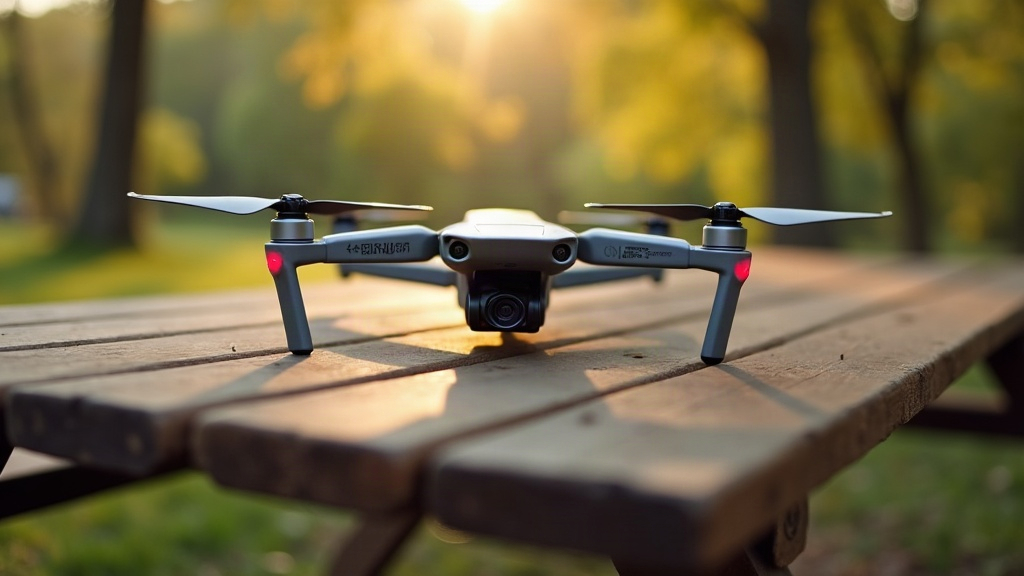
Launching a drone off a metal picnic table doesn’t look like a big deal. It usually isn’t, until the ferrous metal in the frame and legs starts messing with your compass. Then you get erratic flight, toilet-bowling, or a flyaway seconds after takeoff. The fix isn’t complicated: move your launch spot away from metal structures, recalibrate the compass right there on-site, and double-check your magnetometer readings before you ever hit the throttle.
Why Metal Picnic Tables Interfere With Your Drone’s Compass
Your drone figures out which way it’s pointing using a magnetometer (the compass), working alongside GPS for position. That sensor is touchy. Nearby ferrous metal or stray electromagnetic fields throw it off easily. And most public park picnic tables happen to be built from exactly the stuff that causes trouble:
- Galvanized steel frames and legs
- Bolted steel supports set into concrete
- Sometimes rebar buried in the concrete anchors underneath
Put all that together and you get localized magnetic distortion strong enough to confuse a flight controller, especially within 3-6 feet of the surface. Not theoretical, either. It happens more than people expect.
Signs Your Compass Is Being Affected
- A “Compass Error” or “Compass Interference” warning popping up in your flight app before you even take off
- The drone sliding sideways right after liftoff instead of climbing in a straight line
- Toilet-bowling, that slow, lazy circling drift, once it settles into GPS hover
- A home point that got recorded wrong, which makes Return-to-Home a gamble instead of a safety net
See any of these? Don’t launch. This isn’t a “let’s see what happens” situation, it’s a hard stop.
How to Prevent Interference Before You Fly
1. Choose a Clean Launch Surface
Walk at least 10-15 feet away from the table, benches, trash cans, grills, or any parked vehicle. Grass works. A wooden deck works. A plastic launch pad or bare dirt, also fine. If the table is genuinely the only flat spot around, bring a dedicated non-metallic landing pad instead of using the tabletop itself.
2. Recalibrate the Compass On-Site
Calibrated at home this morning? Doesn’t matter. Recalibrate again at the new location, especially if you drove more than a few miles or the elevation changed noticeably. Apps like DJI Fly or Litchi walk you through the horizontal and vertical rotation steps, just make sure you’re doing it standing clear of the table, any metal fencing, grills, or nearby cars.
3. Check for Hidden Metal Underground
Plenty of picnic areas hide utility lines, metal stakes, or rebar-reinforced concrete pads right under the grass, invisible unless you know to look. If the compass error warning won’t go away even after you’ve moved from anything visible, just relocate entirely and try again somewhere else.
4. Keep Metal Objects Off Your Person and Gear
A phone case with a magnetic clasp, a metal water bottle, keys, a multitool clipped to your bag, any of these can throw off calibration if you’re holding the drone close to your body while doing it. Empty your pockets first. Takes five seconds.
5. Use IMU + Compass Health Checks, Not Just Visual Inspection
Most flight apps show a real-time magnetometer interference percentage buried in the sensor status menu. If that number climbs above 30-40%, treat it as unsafe to launch, no matter how strong your GPS signal looks. GPS bars don’t tell you anything about compass health.
What to Do If You Already Launched From a Metal Surface
Already in the air and feeling that drift or circle? Here’s the order of operations:
- Switch to ATTI (attitude) mode if your drone has it. This kills GPS/compass-based positioning and hands you manual control.
- Climb first, away from obstacles, before you even think about landing.
- Land it manually in open space rather than trusting RTH, since the recorded home point might be wrong.
- Fully recalibrate before your next flight, somewhere well away from that original table.
Quick Pre-Flight Checklist for Metal-Heavy Areas
- Launch point is 10+ feet from metal furniture, grills, and fences
- Compass recalibrated at the current location
- No metal objects in pockets or near the drone during calibration
- Sensor status menu shows low/no magnetic interference
- Backup manual landing zone identified in case of drift
Conclusion
It’s an easy thing to overlook: metal picnic tables are everywhere in parks and campgrounds, often the only flat surface for fifty feet in any direction, and they quietly mess with compasses more often than people realize. Treat them like any other magnetic hazard. Move away, recalibrate, confirm the sensors are clean before every single takeoff. Sounds excessive for a picnic table, maybe, but a few extra feet of distance is often the whole difference between a clean flight and a drone drifting somewhere you really didn’t want it to go.