Best Drone Lighting Techniques for Holiday Boat Parades
Why Boat Parades Make Drone Pilots Sweat
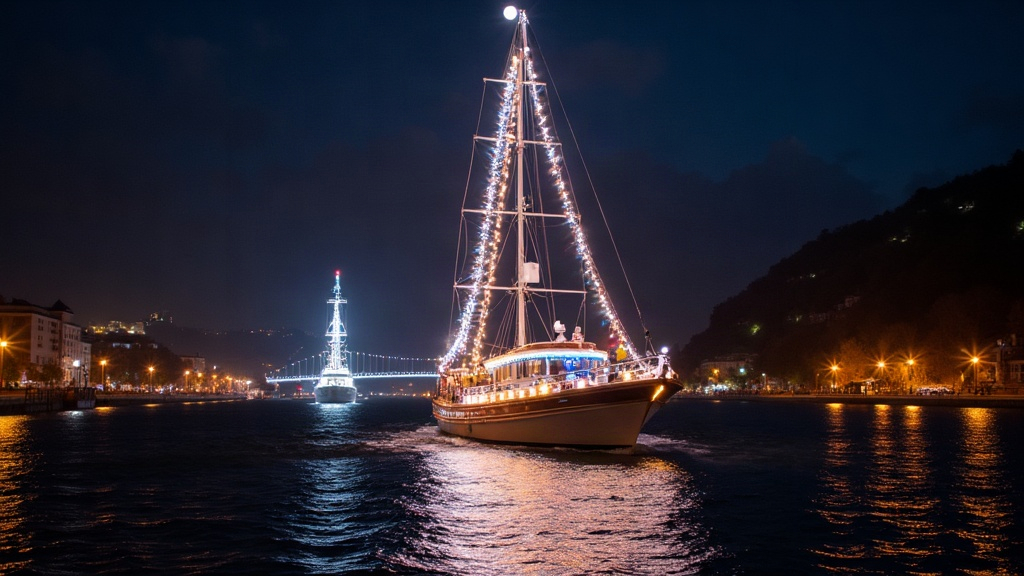
Those strings of colored lights bouncing off dark water? Gorgeous. Also one of the hardest things you’ll ever try to shoot from the air. Low light, boats that won’t sit still, crowded skies, and reflections that can make your footage sing or turn it into a muddy mess, all at once. This guide walks through the lighting tricks, camera settings, and shore positioning that actually work for holiday boat parades, no flying over water, no FAA violations.
Why Boat Parades Are Uniquely Challenging for Drones
Daytime drone work is forgiving. Boat parades are not. You’re fighting three problems simultaneously:
- Low ambient light. Most parades kick off at dusk or after dark has fully settled in.
- Moving, brightly lit subjects. Strands of LEDs wrapped around a moving boat blow out against black water in a hurry.
- Restricted flight zones. Plenty of parades won’t let you fly over the water or the crowd, period. You’re stuck on shore, picking one spot and sticking with it.
That last point is the one that trips people up. You can’t chase a shot you missed. Everything, your settings, your angle, your spot, needs to be locked in before the first boat rounds the bend.
Camera Settings That Make or Break Night Shots
Good news: most consumer drones (DJI Mini 4 Pro, Air 3, Mavic 3) do fine in low light, as long as you take the controls away from auto mode.
Recommended starting point:
- ISO: 400 to 800. Only push higher if your drone has a bigger sensor, like the 4/3 CMOS on the Mavic 3.
- Shutter speed: 1/60 to 1/120 for stills. For video, match your frame rate (1/50 at 25fps is a safe bet).
- Aperture: Open it all the way (f/1.7 to f/2.8 depending on your model).
- White balance: Manual, somewhere between 3200 and 4000K. This keeps those warm holiday bulbs from drifting into an ugly orange-yellow.
- File format: RAW, always (or D-Log/D-Cinelike for video). You’ll want that shadow detail when you get to editing.
Skip auto-ISO completely. The moment a boat drifts from a dim patch into a cluster of bright lights, your exposure will hunt and flicker, and there goes your continuous shot.
Positioning for Natural Light Layering
You’re grounded on shore, so altitude and angle do all the heavy lifting for your lighting.
- Hover between 60 and 150 feet. High enough to see the whole parade line, low enough that the light trails don’t flatten out.
- Shoot at 30 to 45 degrees downward, not straight down. Straight-down shots turn string lights into flat, lifeless dots. The angled view keeps the sparkle and gives you real dimensionality.
- Keep shoreline crowd lighting behind you. Two reasons: your drone won’t silhouette against streetlights, and that ambient glow fills in shadows at the edges of your frame.
Got a route with a curve in it? Post up near the bend. One frame, boats lit from several angles instead of a flat row of matching silhouettes.
Using Water Reflections as a Lighting Multiplier
Calm water is basically free lighting. Reflections double your visible light without any extra exposure risk, which is about as good a deal as you’ll get in night photography.
- Pick nights with little to no wind. Even small ripples will chop reflections into a blurry mess.
- Aim for roughly 40% of your frame being water reflection, not just the boats floating on top of it.
- Reflection blowing out and stealing attention from the boats? Drop your angle a touch to cut how much of that reflected light makes it into the shot.
Dealing with Mixed Color Temperatures
Warm incandescent strings, cool white LEDs, the occasional colored spotlight, all in the same parade, sometimes the same boat. White balance alone won’t fix this.
- Shoot RAW and adjust white balance per shot in post, depending on whichever boat is dominating the frame.
- Use roughly 3500K as your baseline, leaning slightly cool. It keeps colored lights punchy without washing out the warmer tones.
- Stay away from “Auto Scene” or HDR modes in-camera. They flatten contrast right where you actually need some depth.
Timing Your Flight for Best Light
Show up 30 to 45 minutes early. That window right after sunset, blue hour, gives you a deep navy sky instead of flat black. It’s a small thing, but it creates real separation between the boat lights and the background, something you just can’t fake once full night sets in.
Quick Pre-Flight Checklist
- Check no-fly zones and any event-specific drone restrictions ahead of time.
- Lock in manual exposure and white balance before the first boat shows up.
- Pick a shore spot near a bend in the route, away from background light pollution.
- Check the water. Calm, not choppy.
- Pack spare batteries. Winter cold drains them faster than you’d think.
Final Thoughts
There’s no luck involved here, it’s all prep. Nail your manual settings, find a shore spot that puts reflections and the fading sky to work for you, and get there early enough to catch blue hour. Pull that off and your footage will look like it came off a professional shoot, all without ever having to put a drone over the water.