Flying a Sub-250g Drone in Light Autumn Rain: Risks & Recovery
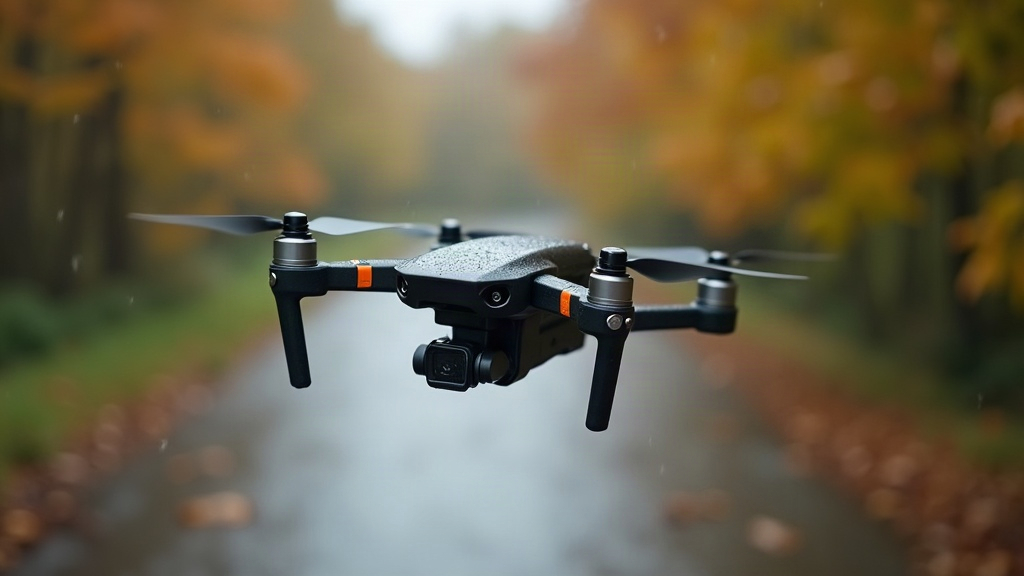
Flying Sub-250g Drones in Light Rain: What Actually Happens and How to Recover
Flying a sub-250g drone like the DJI Mini 4 Pro, Mini 3, or Autel Nano in light autumn rain is tempting. Mist drifting over golden trees makes for genuinely gorgeous footage. The problem? Almost none of these aircraft are rated for moisture exposure at all. This guide breaks down what “light rain” really does to your drone, how to judge the risk before you even launch, and the exact recovery steps if your aircraft gets wet mid-flight.
Why Sub-250g Drones Struggle With Rain
Lightweight drones are built to save grams, not to seal joints. Unlike enterprise models (the DJI Mavic 3 Enterprise carries an IP45 rating, the Autel EVO Max an IP43), consumer sub-250g drones come with:
- No sealed motor housings. Water wicks into bearings with surprising ease.
- Exposed gimbal ribbon cables. Moisture causes micro-shorts right at the camera connector.
- Open vents on the battery and flight controller. These exist for heat dissipation, not for keeping drops out.
- Lower torque motors. Rain adds drag and extra weight to the props, and that strains already-small motors faster than it would on a bulkier drone.
Autumn rain is sneaky precisely because it’s often so fine it looks like fog. Pilots glance up and think “that’s not really rain.” But that fine mist keeps landing on the props and the gimbal dome with every single rotation, and in some cases that’s actually worse than a quick downpour, simply because the exposure time stretches on so much longer.
How Much Rain Is “Too Much”?
There’s no official threshold here, since none of these drones carry a rain rating to begin with. But plenty of commercial pilots work off a practical field rule:
- Visible droplets on your phone screen within 60 seconds of standing outside → ground the drone, no exceptions.
- Light mist or drizzle with no pooling on surfaces → okay only for short flights (under 5 minutes), followed by immediate drying once you land.
- Any rain you can actually hear hitting your jacket hood → too much, regardless of what the forecast calls it.
Wind tends to ride along with autumn rain fronts, and that compounds the risk. Gusts push moisture sideways straight into the drone’s top vents, even when the rain itself looks fairly harmless from the ground.
Pre-Flight Checklist for Marginal Weather
- Check radar, not just the sky. Apps like Windy or RainViewer show whether a cell is building or breaking apart. Don’t trust a patch of blue sky overhead if the radar says rain is 10 minutes out.
- Inspect prop guards and the gimbal cover. A clean, dry gimbal dome sheds water much faster than a dusty one, where droplets cling to grime and work their way into the seams.
- Pack silica gel packets and a microfiber cloth in your field kit. You’ll want both the moment it starts raining.
- Fly shorter, closer-range missions. Keep the drone within line of sight and under 100m altitude so you can abort quickly if the rain picks up.
- Have a dry landing zone picked out in advance, ideally under a tree canopy or a vehicle overhang. Open grass won’t do.
What to Do the Moment It Gets Wet
If your drone picks up moisture mid-flight, resist the urge to panic-land into standing water or wet grass. A controlled response actually matters here:
- Bring it straight down to the nearest dry, flat surface. Forget finishing the shot, that footage isn’t worth the gimbal.
- Power off immediately once it’s landed. Don’t let it sit powered on with wet components; that’s exactly when shorts occur.
- Pull the battery out right away to stop any current running through damp circuit paths.
- Don’t charge the battery until it’s sat at room temperature for several hours and had time to dry out properly.
- Wipe down the external surfaces with a microfiber cloth, then let the whole drone air-dry in a warm (not hot) room for 24 to 48 hours before you power it back on.
Recovery: Drying Without Causing More Damage
- Skip the rice trick. It’s a myth. Rice doesn’t pull moisture nearly as well as people think, and it tends to leave dust in your drone’s vents.
- Use silica gel packets instead, sealed in a container with the drone for a full 24 hours.
- Pull the props and SD card out. This lets trapped moisture escape faster and gives you a chance to check the connectors for corrosion.
- Check the gimbal ribbon connector closely for any green or white corrosion residue. This is, by far, the most common failure point after a drone gets rained on.
- Only power it on once it’s fully dry, and keep an eye out for gimbal calibration errors or IMU warnings on that first boot. Both are classic signs that moisture is still lingering somewhere inside.
Conclusion
Sub-250g drones simply aren’t built for rain, light or otherwise, and autumn’s misty, unpredictable weather is a trap that catches a lot of pilots chasing that perfect seasonal shot. Treat any visible moisture as a hard stop. Keep flights short and close to home during marginal weather, and if your drone does get wet, prioritize a quick power-down and slow, careful drying over rushing back into the air. A little patience after a wet flight can honestly be the difference between a quick scare and a bricked gimbal.