Repairing Cracked Landing Legs on the Potensic Atom: Full Guide
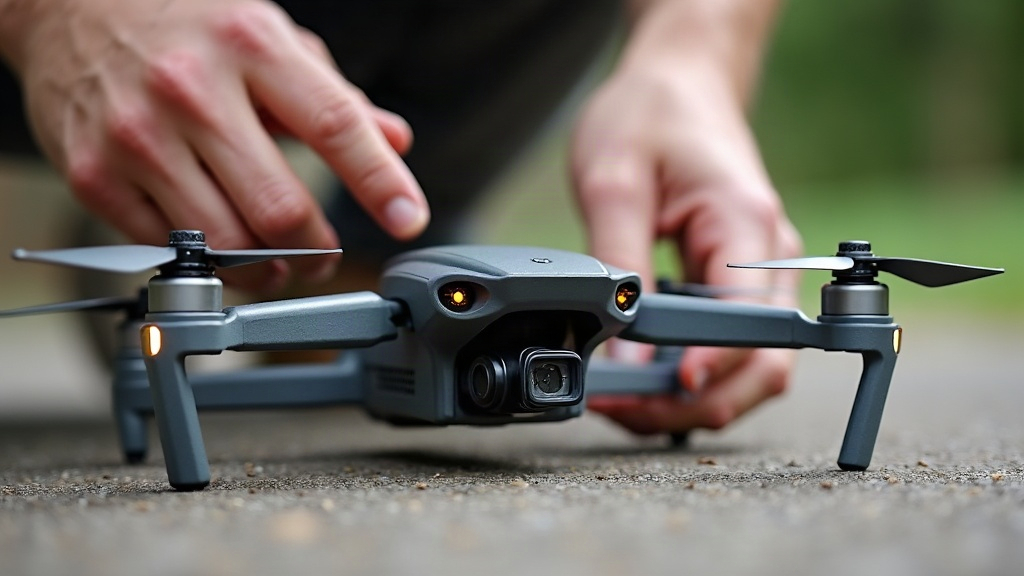
Why Landing Legs Crack on Pavement
If you fly a Potensic Atom long enough, you’ll eventually land it on concrete when you shouldn’t have. It happens to everyone. The good news: a cracked landing leg is one of the most common failures on this drone, and it’s almost always a cheap, under-an-hour fix you can handle at your kitchen table.
The legs are molded from a lightweight polycarbonate/ABS blend, chosen specifically to keep the aircraft light and efficient in the air. That weight saving comes at a cost on the ground, though. Grass and dirt flex a little on impact; concrete and asphalt don’t give an inch. A few things tend to cause the crack in the first place:
- Fast descent rate – coming in at full speed instead of easing into a hover first
- Uneven touchdown – one leg taking the full hit instead of all four sharing the load
- Wind gusts during landing – the drone tips or skids right as it touches down
- Pre-existing stress fractures – an earlier, barely-noticed bump weakened the plastic, and this landing just finished the job
Step 1: Assess the Damage
Don’t reach for the glue yet. Walk through a proper inspection first:
- Power off and pull the battery.
- Check all four legs, not just the one that’s obviously snapped. Impact stress tends to travel, so a hairline crack on an adjacent leg is common.
- Look at the leg mounting points on the body itself. A crack in the frame is a different, more serious problem than a crack in the leg.
- Check the propellers and motor arms too. Whatever caused the leg to crack probably knocked something else around as well.
If what you’re looking at is a clean break (one piece, not shattered into fragments) and the mounting point still feels solid, you’re in good shape for a DIY repair.
Step 2: Repair Options
Option A – Plastic Welding / Epoxy Bond (Best for Clean Cracks)
This is the fix that holds up long-term:
- Wipe down both crack surfaces with isopropyl alcohol first. Any dust or finger oil left behind will weaken the bond.
- Run a thin bead of plastic-specific epoxy along the crack. JB Weld PlasticWeld and Gorilla Epoxy both work well here, standard super glue doesn’t flex enough and will re-crack.
- Clamp or tape the leg so it sits in its correct position, then leave it alone. Cure times vary by product, anywhere from 4 to 24 hours, so check the label and don’t rush it.
- Once cured, sand off any excess glue so it doesn’t snag the folding mechanism when you fold the legs for storage.
Option B – Replacement Leg Swap
If the leg snapped clean off, or you’d rather not mess with epoxy, just replace it:
- Order OEM legs from Potensic’s official parts store or an authorized reseller. Third-party knockoffs exist but fit is hit or miss.
- Most legs are held by a single screw plus a snap-fit tab. Remove the screw, release the tab, and the old leg slides right out.
- Press the new one in, reinsert the screw, and stop turning once it’s snug. The mounting posts are plastic too, and overtightening strips them fast.
Option C – Reinforcement Sleeve (Temporary Fix)
Need to fly today and don’t have parts yet?
- Wrap heat-shrink tubing or a strip of gaffer tape around the cracked section.
- It’s not a real repair, it won’t restore the leg’s original strength, but it’ll usually get you through one more session without the crack spreading further.
Step 3: Preventing Future Cracks
- Land on foam or grass whenever you have the option. Save the concrete pad for the rare occasion it’s unavoidable.
- Use Return-to-Home landing in calm conditions. The auto-descent is gentler than most people’s manual stick landings, mine included.
- Ease off the throttle in the last few feet instead of dropping straight down. A slower final approach spreads the impact across all four legs instead of one.
- Keep spare legs in your flight bag. A full replacement set usually runs under $10, which is nothing compared to grounding your drone mid-trip.
- Check the legs after every hard landing, even the ones that look fine. A hairline crack today can turn into a mid-flight failure next week.
When to Consider a Full Frame Replacement
If the crack has traveled past the leg and into the main body shell, or if the mounting point still wobbles after you’ve glued it, don’t push your luck. Replace that frame section. A weak mounting point isn’t just cosmetic, it can let a leg snap off mid-flight, and that’s how you lose an aircraft entirely or crack the gimbal and camera on the crash that follows.
Conclusion
A cracked leg from a hard pavement landing looks worse than it is. Clean cracks respond well to plastic epoxy, snapped-off legs are a quick OEM swap, and either option costs you far less time and money than you’d expect. Pair the repair with better landing habits (softer surfaces, gentler descents, a quick check after every rough touchdown) and your Atom’s landing gear will last a lot longer than you’d think.